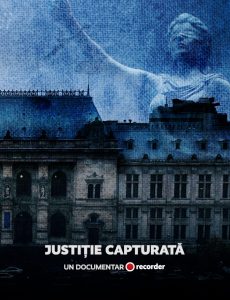
Captured justice


After several years in which discussions around the justice system had almost completely disappeared from the public agenda, the Romanian society has awakened to a hard-to-digest reality in which major corruption cases are being systematically buried. Well-known defendants acquitted on appeal after receiving heavy prison sentences in the first instance, trials dragged out until the offenses reach the statute of limitations, final convictions that are reassessed and wiped clean. In addition, suspicions have begun to loom over the National Anticorruption Directorate (DNA) regarding the blocking of certain criminal investigations.
“The feeling is that no matter what you do, you get away with it,” says one of the prosecutors we interviewed. The same person made a shocking statement at the most recent annual review of the Prosecutor General’s Office: “Romania is closer to being a paradise for criminals than a state governed by the rule of law.”
How did we get here? This two-hour documentary, published after more than a year and a half of investigative work, attempts to explain the complex mechanisms through which the judicial system—one of the key pillars of any democratic state—came to be captured by a group of interests made up of judges, prosecutors and politicians.
In simple terms, the pact between the two camps looks something like this: politicians provided laws that created a top-down structure in the judicial system, placing all power in the hands of a small group of people. That same small group of people offered in return a justice system that often turns a blind eye on those in power.
The testimonies that we gathered from inside the justice system and are presenting in this documentary are of unprecedented gravity. They speak of major corruption cases in which judges are encouraged to deliver decisions favorable to the defendants; of the blatant violation of the principle of random case assignment through the discretionary reshuffling of judicial panels; and of how those who refuse to comply are marginalized, harassed through investigations by the Judicial Inspection, and sometimes even expelled from the judiciary.
The consequences of these dramatic realities affect all of our lives, because a democratic society cannot survive without an independent judiciary.